
From Shell to Fire: Inside the Making of Coconut Charcoal
How Energy is Made

Welcome back to the Coconut Charcoal Report, the newsletter that takes you inside Indonesia’s coconut charcoal industry—sharing real stories and highlighting the people behind a business often reduced to ash content and fixed carbon, written by a German woman working in the industry since 2015.
Most buyers of coconut charcoal focus on price.
But the real difference in quality is decided long before the product reaches a factory.
It starts at the farm.
Carbonization: Where Quality is Won (or Lost)
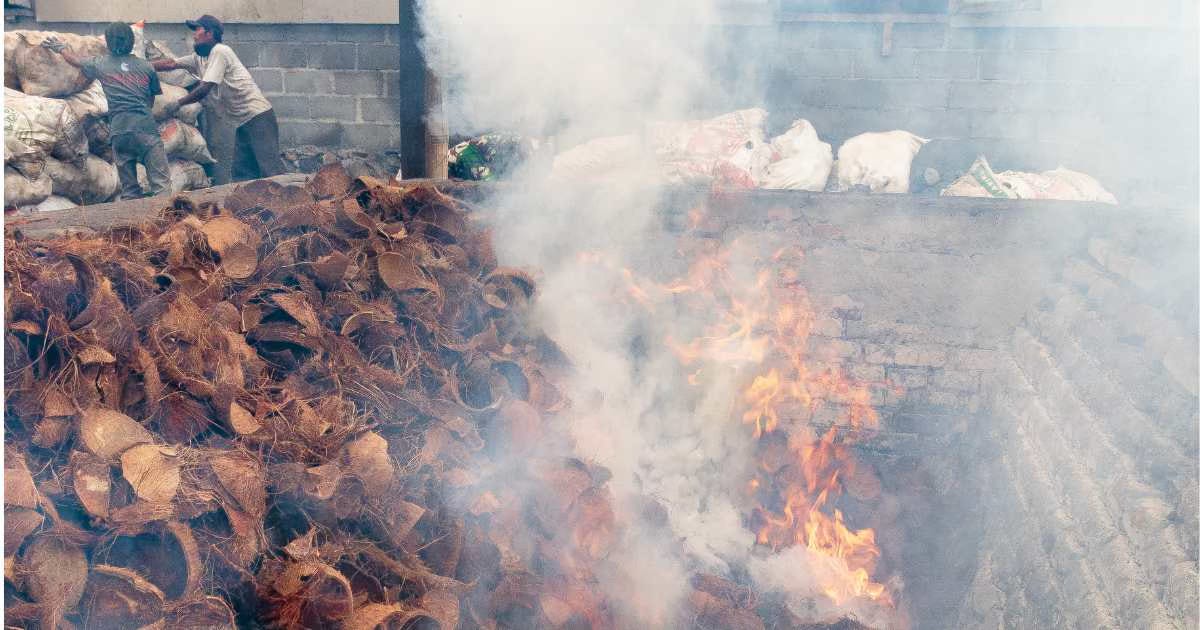
Producers buy their raw material directly from farmers who collect and carbonise the coconut shells in traditional clay kilns, pit kilns, or simple drum kilns, while more advanced producers may use brick or retort kilns for improved efficiency and lower emissions.The shells typically smolder for around 24 hours, followed by one to three days of cooling in a low-oxygen environment to prevent combustion and preserve charcoal quality.
At the end of the process, only about 25% of the original weight remains.
To produce 1 ton of charcoal, approximately 20,000 coconuts are needed.
That alone tells you something about pricing.
When properly carbonized, the shells become as thin and brittle as glass. In fact, one quality test is simple:
If they break as quickly as glass when dropped, they are ready.
Raw Material Matters
Not all coconut shells are equal.
Shells from different regions behave differently. This is especially important for shisha charcoal, where customers are highly sensitive to ash development and ash color.
In the Middle East, consumers expect white ash. In Europe, the focus is more on low ash content overall.
Developing the right mixture for each market is not a science learned from books. It requires experience, testing, and years of refinement.
From Shell to Briquette: The Industrial Process
Once the carbonized shells arrive at the factory, they are:
Sieved to remove impurities
Hand-sorted to eliminate foreign objects like nails or debris
Ground into fine powder using a milling machine
Mixed with water and tapioca starch
Tapioca, derived from cassava root, acts as a natural, taste-neutral binder. When combined with water, it forms a moldable mass — almost like clay.
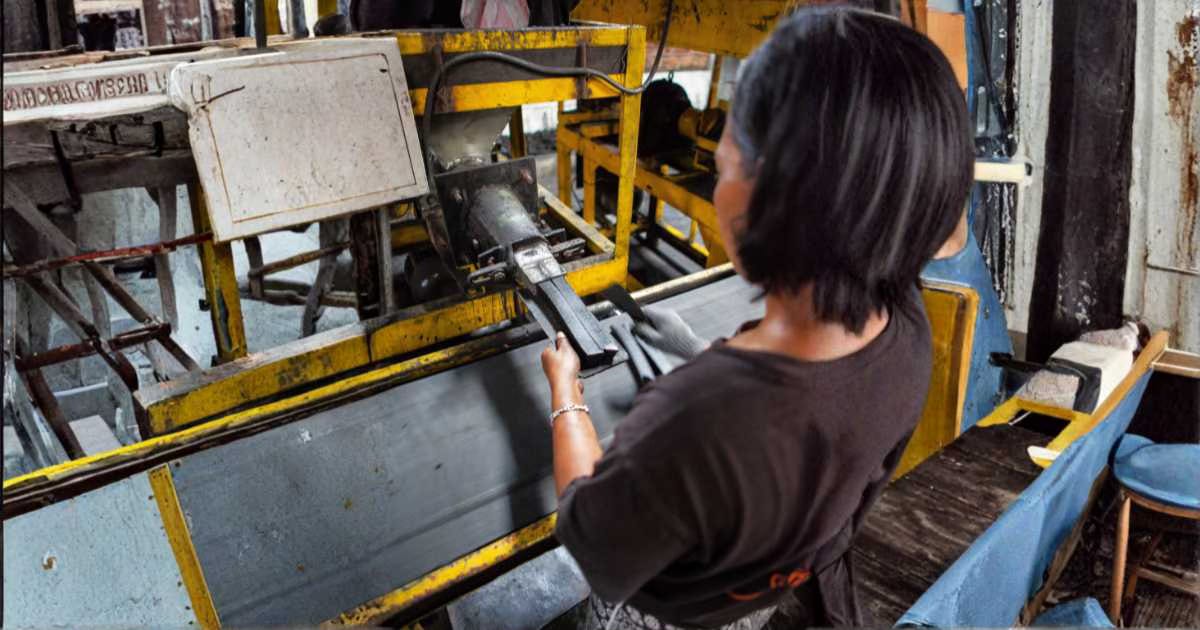
This mixture is then fed into an extruder press and heated to a maximum of 45°C. Under pressure, the material is pushed through a shaped opening, determining the final form of the briquette.
Shape matters more than you might think.
In South America, hexagonal charcoal is common for shisha. In the Middle East, cube-shaped charcoal dominates. Grill briquettes come in pillow shapes, hexagonal formats, or cubes — depending on consumer habits and equipment.
After extrusion, the moist charcoal is cut to size, manually inspected, and placed on trays.
It cools for 24 hours.
Then it hardens in ovens at 90°C for another 20 hours.
Only then is it ready.
Thank you so much for reading, your support is the best motivation to keep writing.
If this resonated, feel free to share it with others who might find it interesting. You can also click the heart or leave a comment. I’d love to hear your thoughts and keep the conversation going.
See you in the next post.
I had no idea how much actually goes into this — from the raw shells to shaping the final product, it’s way more detailed than people assume, really interesting to see it broken down like this! 🔥